A fitted kitchen should do more than look impressive in a showroom. It needs to suit the way you cook, move, store, clean, and live every day. That is really the answer to how fitted kitchens work – they are planned around your room, your routines, and the details that make a kitchen feel easy to use rather than awkward to live with.
Unlike freestanding furniture or off-the-shelf cabinet runs, a fitted kitchen is designed as a complete system. Cabinets, appliances, worktops, storage features, and finishing panels are measured and arranged to work together within the exact dimensions of your space. The result is a kitchen that feels built into the home rather than simply placed inside it.
How fitted kitchens work from the start
The process begins with the room itself. Every wall, corner, ceiling height, window position, pipe run, and doorway affects what is possible. In older homes especially, rooms are rarely perfectly square, which is one reason fitted kitchens are so effective. Instead of forcing standard units into an imperfect space, the design is adjusted to the reality of the room.
That design stage is where the practical value sits. A good designer is not just choosing door styles and finishes. They are thinking about workflow, traffic flow, sightlines, and storage. Where will you unload groceries? Is the oven in a safe and comfortable position? Will two people be able to use the room at once? Can small appliances be stored without taking over the counters?
In a well-planned fitted kitchen, these decisions are made before anything is ordered. That avoids the common problem of a kitchen looking attractive on paper but feeling frustrating once installed.
It is about layout as much as cabinetry
People often assume fitted kitchens are mainly about custom cabinets. Cabinetry matters, of course, but layout is what makes the kitchen function properly. The room has to support a natural sequence of tasks, from storage to prep to cooking to cleaning.
That usually means placing the sink, cooktop, refrigeration, and preparation areas in sensible relation to one another. In some homes, a galley layout is the smartest use of space. In others, an L-shape, U-shape, or island design creates a better balance between storage and openness. There is no single best answer because the right layout depends on room size, household habits, and whether the kitchen is purely for cooking or also used for dining, entertaining, homework, or family time.
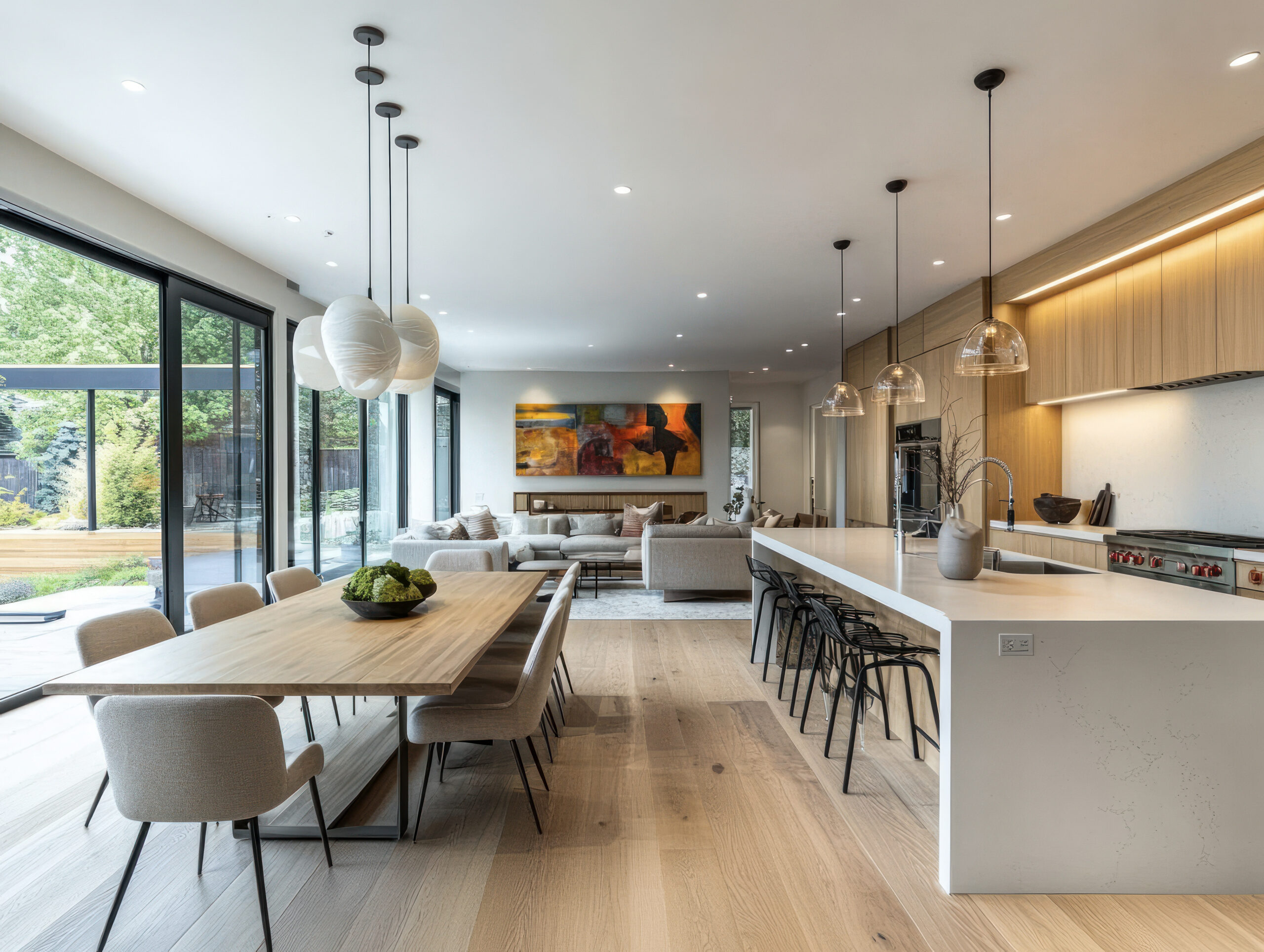
This is where bespoke planning is very worthwhile. A large open-plan kitchen may need zoning so it feels organized rather than sprawling. A compact kitchen may need smarter corner solutions and taller cabinetry to make every inch count. The way fitted kitchens work is by responding to those differences instead of treating every home the same.
Storage is built into the design
One of the biggest advantages of a fitted kitchen is that storage is not added as an afterthought. It is planned from the outset. Deep drawers for pans, internal pull-outs for pantry goods, tray storage, integrated recycling, spice organization, and hidden appliance garages can all be designed around how the household actually uses the room.
This makes a visible difference in day-to-day life. When storage matches the items you own, counters stay clearer and the kitchen feels calmer. That does not mean every kitchen needs every internal accessory. Sometimes a simpler cabinet layout is the better choice, especially if it keeps the design clean and intuitive. The goal is not to include every possible feature. It is to include the right ones.
Materials and finishes are part of performance
A fitted kitchen is not just a visual project. Every surface and component has to stand up to heat, moisture, cleaning, and repeated use. Cabinet construction, hinge quality, drawer runners, worktop materials, and finish durability all play a part in how well the kitchen performs over time.
This is one of the key differences between a premium fitted kitchen and a lower-cost alternative. Two kitchens can look similar in photos, but wear very differently in real life. Better manufacturing and installation tend to show up in the details – door alignment, drawer movement, filler accuracy, panel finishing, and how well everything still works years later.
There are trade-offs here too. Painted finishes can look beautifully tailored but may require a little more care than highly durable laminates. Natural stone brings character but needs the right maintenance. Handle-less designs create a clean, modern look, but some homeowners still prefer the feel and familiarity of traditional handles. The right choice depends on your style, your household, and how you want the kitchen to age.
Appliances are integrated into the plan
Appliances are not simply slotted in at the end. In a fitted kitchen, they are considered early because their dimensions, ventilation needs, door clearances, and service requirements affect the entire layout.
Integrated refrigeration, built-in ovens, concealed dishwashers, and induction cooktops help create a cohesive look, but they also need careful coordination. A kitchen that appears visually effortless usually involves a great deal of detailed planning behind the scenes. Electric, plumbing, extraction, and lighting all have to align with the cabinetry and appliance specifications.
This is another reason a single, coordinated service is so valuable. When design, product selection, and installation are connected, there is less room for mismatch and delay.
How fitted kitchens work during installation
Installation is where the plan becomes real, and it is often the stage homeowners worry about most. A fitted kitchen is installed in sequence, usually beginning with preparation of the room, followed by cabinet fitting, services coordination, worktop templating if needed, final fitting, and finishing details.
Precision matters here. Even excellent products can look disappointing if installation is rushed or inconsistent. Scribed panels, aligned doors, level worktops, neat service access, and clean finishing around walls and flooring are what make a kitchen feel truly fitted. In practical terms, this is the difference between a room that looks custom-built and one that looks pieced together.
Timelines can vary depending on complexity. Structural work, flooring changes, lighting upgrades, or utility-room connections may affect the schedule. That is normal. The key is having a clear plan and a reliable point of contact so the process feels managed rather than chaotic. At Home Interiors by Anscombs, each project has a dedicated project manager and clients are given a schedule of works.
Fitted kitchens are designed for the long term
A good fitted kitchen should solve immediate needs, but it should also support the way you want to live in the coming years. That might mean extra pantry storage for a growing family, better accessibility, more durable finishes for busy daily use, or a layout that makes entertaining easier.
This long-term view is one reason many homeowners choose a bespoke provider rather than a standard retail option. A kitchen is a major part of the home, both financially and practically. It needs to feel right beyond the first few weeks after installation.
That does not always mean choosing the most elaborate design. In many homes, the best fitted kitchen is the one that feels calm, well organized, and easy to maintain. Thoughtful restraint can be just as valuable as statement features.
Why professional design makes such a difference
When homeowners ask how fitted kitchens work, they are often really asking why the process needs professional input. The answer is simple. A kitchen has more moving parts than most rooms in the house, and small planning errors can have expensive consequences.
Professional design helps prevent those issues before they happen. It brings together measurements, materials, ergonomics, aesthetics, appliances, and installation requirements into one coherent plan. It also helps you make better decisions about where to invest. In some projects, custom storage is the priority. In others, the focus may be on improving layout, elevating finishes, or creating a stronger connection between the kitchen and adjoining living space.
For homeowners who want a polished result without juggling multiple suppliers and trades, that joined-up approach offers real peace of mind. At Home Interiors by Anscombs we build our service around that principle, with tailored design, coordinated project handling, and professional installation all working together.
A fitted kitchen works best when it feels natural from the moment you start using it – when storage is where you need it, movement through the room feels comfortable, and the finish reflects the quality of the home around it. If you are planning a new kitchen, the smartest place to start is not with colors or door samples, but with how you want the room to work for you every single day.