A well-planned kitchen rarely starts with cabinet colours or worktop samples. It starts with how you live. The bespoke kitchen design process is about shaping a room around the way your household cooks, stores, entertains and moves, so the final result feels considered from the first sketch to the last fitting.
For many homeowners, that is the real difference between a bespoke kitchen and a standard retail option. It is not simply a matter of choosing nicer doors or more premium finishes. It is about creating a layout that suits the architecture of the property, the routines of the family and the level of quality you expect from a long-term investment.
What the bespoke kitchen design process should achieve
At its best, a bespoke kitchen should do more than look impressive. It should improve daily life. That might mean better storage for a busy family, a more sociable layout for entertaining, or a calmer, better organised space for a couple who want simplicity and order.
Good design balances appearance with practical use. A large island may look appealing, but if it interrupts circulation or leaves too little room for doors and drawers to open comfortably, it becomes a compromise rather than a feature. In the same way, handle-less cabinetry can create a clean, contemporary look, but some households prefer the tactile feel and traditional character of an in-frame design. The right answer depends on the home and the people using it.
This is why a thoughtful process matters. It helps avoid expensive decisions made too early and ensures the kitchen is tailored properly, not just customised at surface level.
Step 1: The initial consultation
The first stage is usually a design consultation, often carried out in the home so the designer can understand the room in context. This is where the practical questions come in. How many people use the kitchen every day? Do you cook from scratch most evenings, or is the space used more for quick meals and weekend hosting? Is storage currently a frustration? Do you need a utility area, breakfast seating or a pantry-style zone?
This part of the bespoke kitchen design process is less about products and more about priorities. A good designer listens carefully and translates those needs into possibilities. They will also look at the property itself, considering features such as natural light, ceiling height, awkward corners, period details and how the kitchen connects with adjoining rooms.
For homeowners, this stage often brings clarity. Many people know what they dislike about their current kitchen, but not necessarily what will solve it. A professional consultation bridges that gap.
Step 2: Surveying and measuring the space
Accurate measurements are the foundation of any fitted kitchen project. Walls are rarely perfectly square, floors may slope slightly and existing services can affect what is realistically possible. A proper site survey allows the design to reflect the room as it truly is, rather than how it appears on a rough floor plan.
This stage is particularly important in older properties, where charming architectural details can sit alongside structural quirks. In those homes, bespoke cabinetry can be a real advantage because it allows the design to work with the building rather than forcing standard-sized units into place.
Surveying is also the point where practical constraints become clear. Window positions, door swings, extractor routes and plumbing locations all need careful consideration. Some can be altered, but every change has an impact on budget, timing and installation complexity.
Step 3: Layout planning and concept design
Once the brief and measurements are in place, the design starts to take shape. This is where layout planning becomes central. The aim is to create a kitchen that feels natural to use, with sensible relationships between preparation areas, cooking zones, refrigeration and storage.
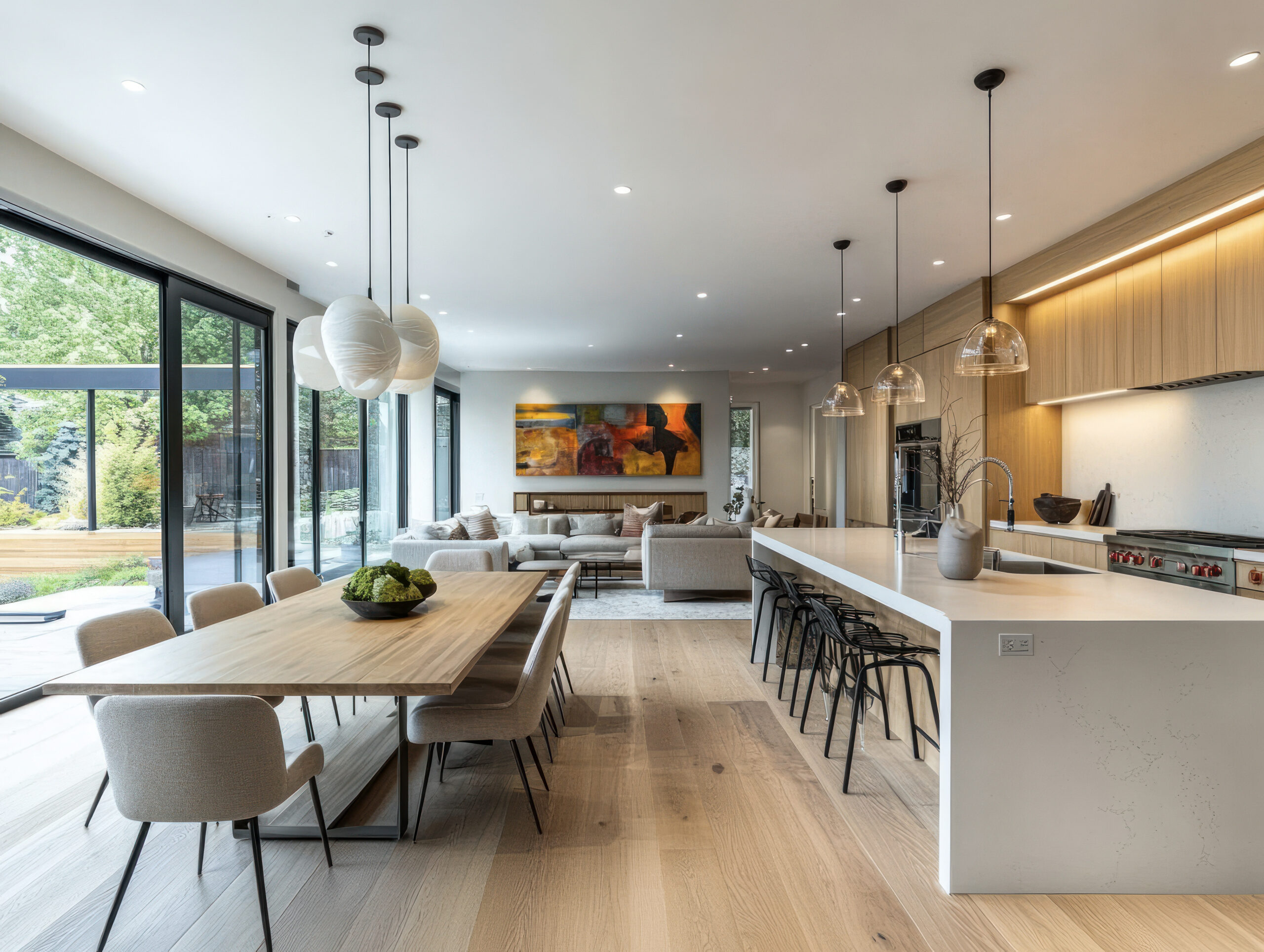
There is no single perfect formula. In some homes, an island is the best way to add workspace and create a sociable focal point. In others, a galley layout is more efficient. Open-plan kitchens need particular care, as they must function as working rooms while still feeling visually calm from neighbouring living and dining spaces.
A well-developed concept design should address both macro and micro decisions. The larger questions involve room flow, furniture placement and zoning. The finer details include bin storage, internal drawer organisation, appliance positioning and whether tall cabinetry might make the room feel heavier than intended.
This is often the stage where homeowners begin to see the value of bespoke planning. Instead of adapting your lifestyle to a predefined range, the design is being adjusted around your habits and preferences.
The bespoke kitchen design process and product selection
After the layout has been established, attention turns to materials, finishes and features. This is the part many clients look forward to most, but it works best when the practical framework is already settled.
Door style, cabinetry construction, worktops, handles, lighting and appliances all contribute to the final character of the kitchen. A classic painted kitchen may suit a period property beautifully, while a contemporary handle-less scheme can work particularly well in a modern extension. Neither is inherently better. The right choice depends on the setting, the client’s taste and how the room is meant to feel.
There are always trade-offs to consider. Natural timber and painted finishes bring warmth and individuality, but they require care and thoughtful specification. Statement worktops can transform the appearance of a room, though some materials are more forgiving in day-to-day use than others. Premium appliances may improve performance and longevity, yet not every household needs the same level of technical capability.
A service-led design company should help clients weigh these decisions properly, rather than simply upselling features that sound appealing in a showroom.
Step 5: Refining the design and final sign-off
Most bespoke kitchens go through a refinement stage before manufacture begins. This is where drawings are reviewed, selections are confirmed and the finer details are resolved. It may involve adjusting cabinet sizes, changing internal storage solutions or rebalancing a colour scheme once samples are seen in the light of the home.
This part of the process is valuable because even excellent first designs benefit from careful review. A kitchen is a major investment, and clients should feel confident that every detail has been considered before orders are placed.
Clear communication matters here. Homeowners should understand what is included, what the installation sequence will look like and where any preparatory building, electrical or plumbing work sits within the wider project. Having one point of contact throughout can make a significant difference, particularly for busy households who want reassurance as much as design quality.
Step 6: Manufacture and project coordination
Once approved, the kitchen moves into production and scheduling. This phase is less visible to the client, but it has a direct effect on the final standard of the installation. Timings need to align, products need to arrive in the correct order and any associated trades must be coordinated carefully.
This is one reason many homeowners prefer an end-to-end service rather than piecing the project together themselves. Managing suppliers, installers and snagging across several parties can quickly become stressful. A coordinated approach brings more accountability and generally leads to a smoother experience.
For premium fitted kitchens, workmanship behind the scenes matters just as much as appearance on the surface. Cabinet construction, finish quality and precise planning all influence how the room performs over time.
Step 7: Professional installation and finishing details
Installation is where the design becomes real, and it is often the stage clients remember most clearly. Tidy workmanship, attention to detail and respectful service all shape the experience.
A professionally installed bespoke kitchen should feel resolved, not rushed. Lines should be clean, panels neatly scribed, doors properly aligned and finishes consistent throughout. The best results come when installation is treated as a craft in its own right, not just the final box to tick.
At this stage, small details often have the biggest impact. Internal storage should operate smoothly. Lighting should support both task use and atmosphere. Decorative features should feel integrated rather than added on. When these things are handled well, the kitchen has a sense of quality that is hard to replicate with off-the-shelf solutions.
Why this process matters for long-term value
A bespoke kitchen is not only about creating something attractive for now. It is about investing in a room that will continue to work well in five, ten or fifteen years’ time. That depends on more than appearance. It relies on sensible planning, durable materials and installation carried out to a high standard.
For homeowners in areas such as Brentwood, Chigwell and Epping, where many properties have distinct layouts and clients often want a kitchen that complements the wider character of the home, a tailored design process can be especially worthwhile. It allows the finished space to feel individual and appropriate, rather than generic.
The right kitchen should make the everyday easier while adding lasting quality to the home. When the process is handled properly, the result is not just a fitted room, but a space that feels genuinely made for you.
If you are considering a new kitchen, it is worth choosing a design approach that starts with your life, not a standard range. That is usually where the best decisions begin. Start your journey with our friendly expertise here at Home Interiors by Anscombs