The most compelling kitchen design trends for now and as we head towards 2027 are kitchens with real warmth, carefully considered storage and layouts that work hard for family life, entertaining and quieter everyday moments. For homeowners investing in a fitted kitchen, the aim is not to chase every new finish. It is to choose a design that feels personal now and remains a pleasure to use for years to come.
Kitchen design trends 2027: a move towards lived-in luxury
For some time, kitchens have been moving away from stark, purely minimalist schemes. In 2027, that shift is likely to become more assured. Expect spaces that are polished but not precious, with natural texture, softer colour palettes and details that reward a closer look.
This does not mean every kitchen needs a rustic feel. A contemporary handle-less design can still be elegant and calm. The difference lies in the materials and proportions: matt finishes with depth, timber accents, beautifully veined stone and gentle lighting rather than an expanse of bright white cabinetry and hard gloss surfaces.
The most successful designs will balance visual impact with a sense of comfort. A kitchen is often the busiest room in the house, so the finishes need to suit the way you live, not merely photograph well.
Warmer neutrals replace cold grey
Warm putty, mushroom, clay, soft taupe and muted olive are likely to remain popular alternatives to cool grey. These tones sit comfortably alongside natural timber, aged bronze, brushed brass and darker painted shades, giving a room more depth without making it feel heavy.
Deep greens, inky blue and rich burgundy can also work beautifully, particularly on an island or a bank of tall cabinets. They are strongest when used with restraint. In a kitchen with limited daylight, a dark scheme may benefit from lighter worktops, reflective splashback materials and layered lighting to retain an open feel.
Colour should also relate to the rest of the home. If the kitchen opens onto a dining or living area, a tailored palette creates a more considered transition than treating the kitchen as a separate, purely practical zone.
Materials with character, chosen for daily use
Natural and nature-inspired materials will remain central to kitchen design in 2027, but practicality matters just as much as appearance. Homeowners are increasingly asking how a surface will wear, clean and cope with busy mornings, not simply how it looks under showroom lighting.
Timber cabinetry, or timber-effect finishes with convincing grain and texture, brings immediate warmth. Fluted glass, reeded details and subtle ribbed panels can add interest to a pantry door, island end or glazed dresser without overwhelming the room. Stone and porcelain worktops continue to be sought after for their substantial feel and elegant finish.
There are sensible trade-offs. Natural stone has unique beauty but may need more care than engineered alternatives. Timber adds character but needs a finish suited to kitchen conditions. A good design consultation considers these choices in relation to children, pets, cooking habits and the level of maintenance you are comfortable with.
Statement stone used more selectively
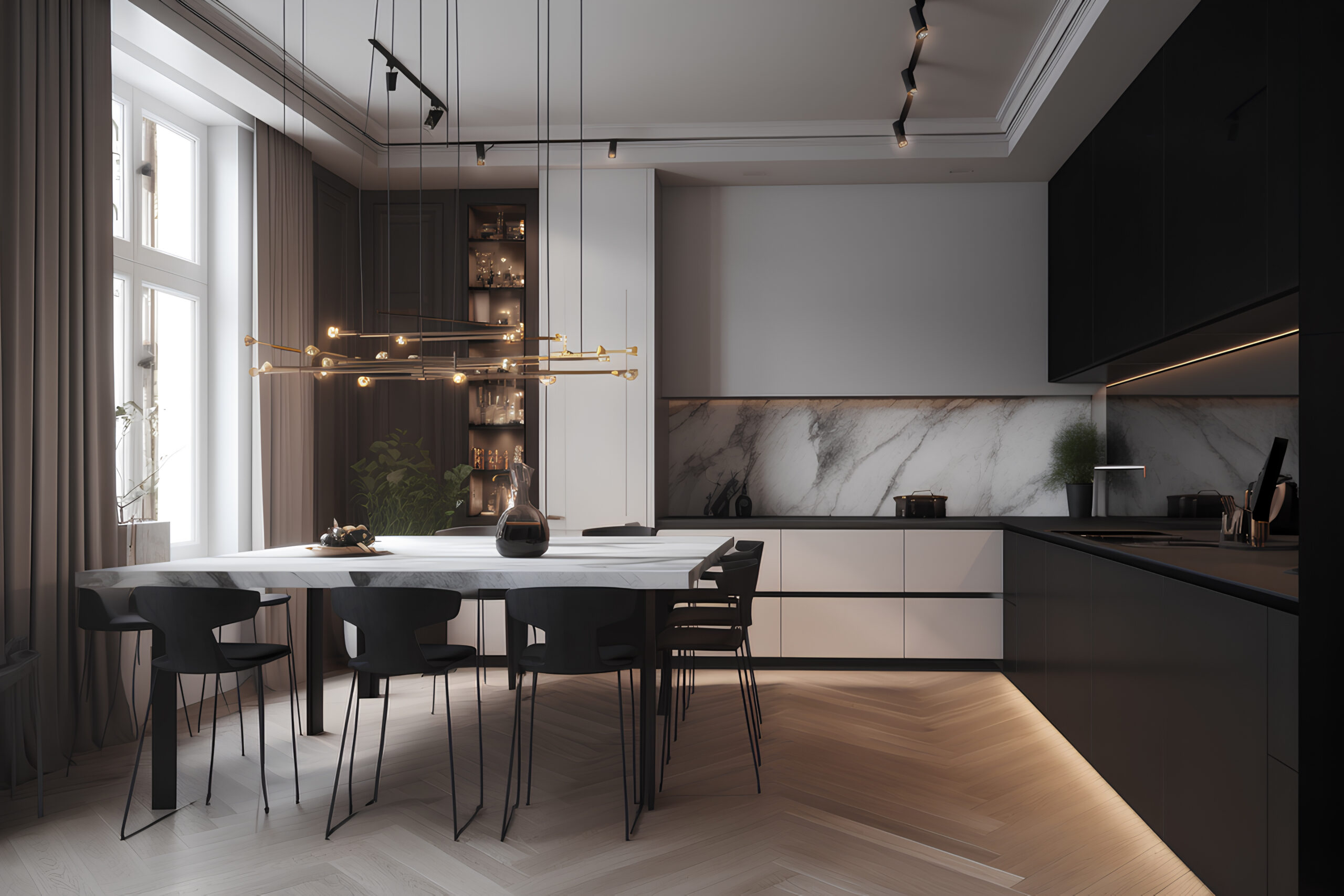
Dramatic veining is not disappearing, but it is being used with greater purpose. Rather than covering every surface, a distinctive stone or porcelain may be reserved for a generous island, a full-height splashback or a carefully framed cooking area. This allows the material to become a focal point while the rest of the room remains calm.
Waterfall worktop edges will still suit some contemporary schemes, although a slimmer profile or a softened edge can feel less formal. The right decision depends on the cabinetry style and the architecture of the room. In-frame kitchens often benefit from more traditional worktop detailing, while handle-less designs can carry a crisp, uninterrupted surface.
Storage becomes quieter and more intelligent
One of the most valuable kitchen design trends 2027 is not a colour or finish at all. It is better organisation. Homeowners are placing more value on clear worktops, accessible cupboards and dedicated places for the appliances and supplies that create daily clutter.
A well-planned kitchen should make it easy to put things away. Deep drawers near the hob can hold pans, utensils and spices. A larder can store dry goods, small appliances and serving pieces in one organised place. Pull-out storage makes awkward corners work harder, while internal dividers prevent wide drawers becoming untidy after a few weeks.
The aim is not to conceal everything for the sake of it. It is to make the room feel composed without adding effort to everyday routines. This is particularly important in open-plan homes, where the kitchen remains in view long after cooking has finished.
The return of the proper pantry and utility space
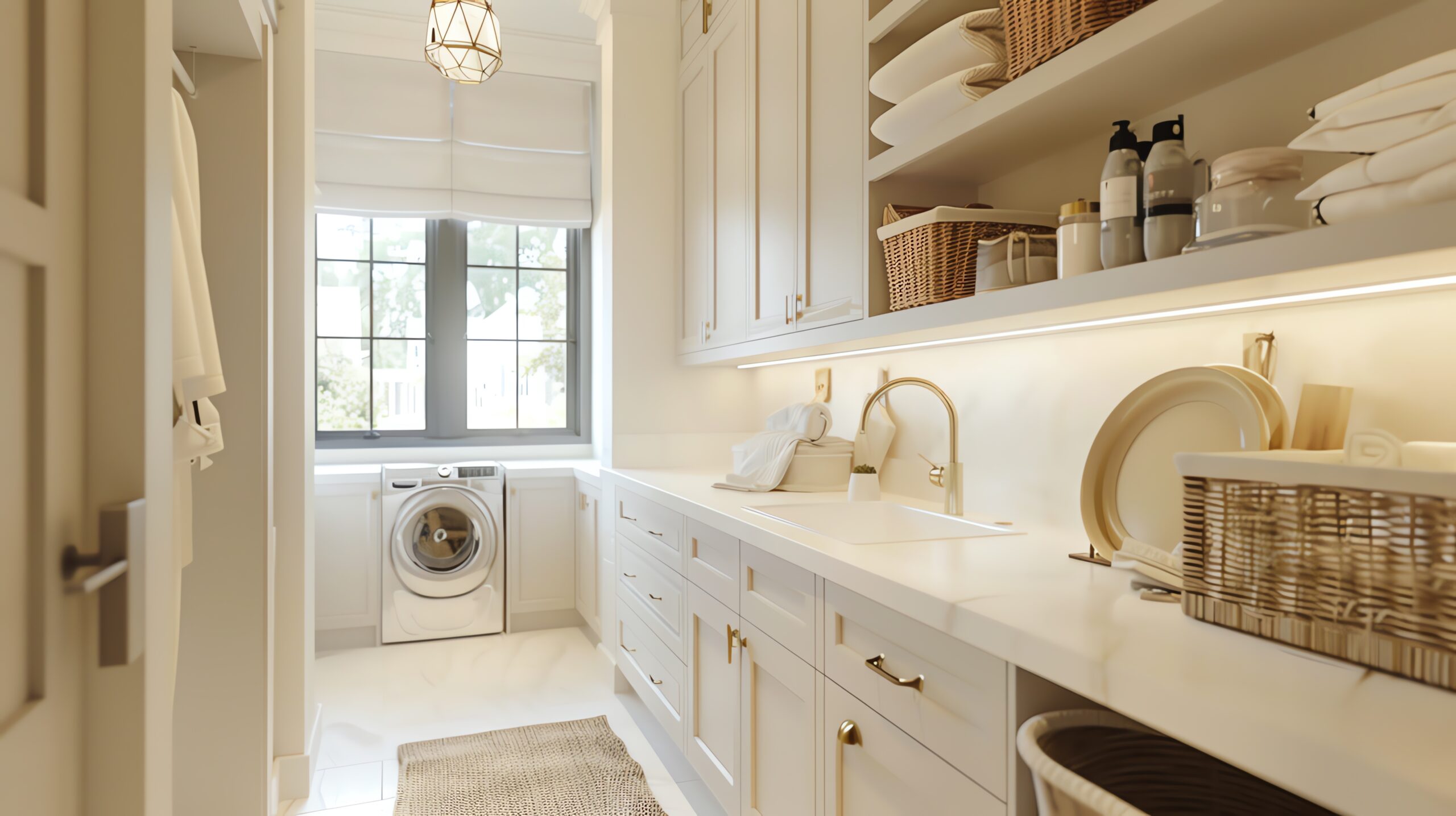
Where space allows, a walk-in pantry, pantry cupboard or utility room is becoming a priority. These areas can take pressure off the main kitchen by housing laundry, food storage, bulky cookware and less attractive essentials.
A pantry does not need to be large to be effective. Even a tall, carefully fitted cabinet can provide shelving, internal drawers, integrated sockets and space for a coffee machine or microwave. For larger homes, a separate utility or boot room can create a practical buffer between the garden, pets, laundry and the main living space.
Planning these zones early is key. Trying to add storage after the layout has been decided often leads to compromises that a bespoke design could have avoided.
Kitchens designed as part of the wider home
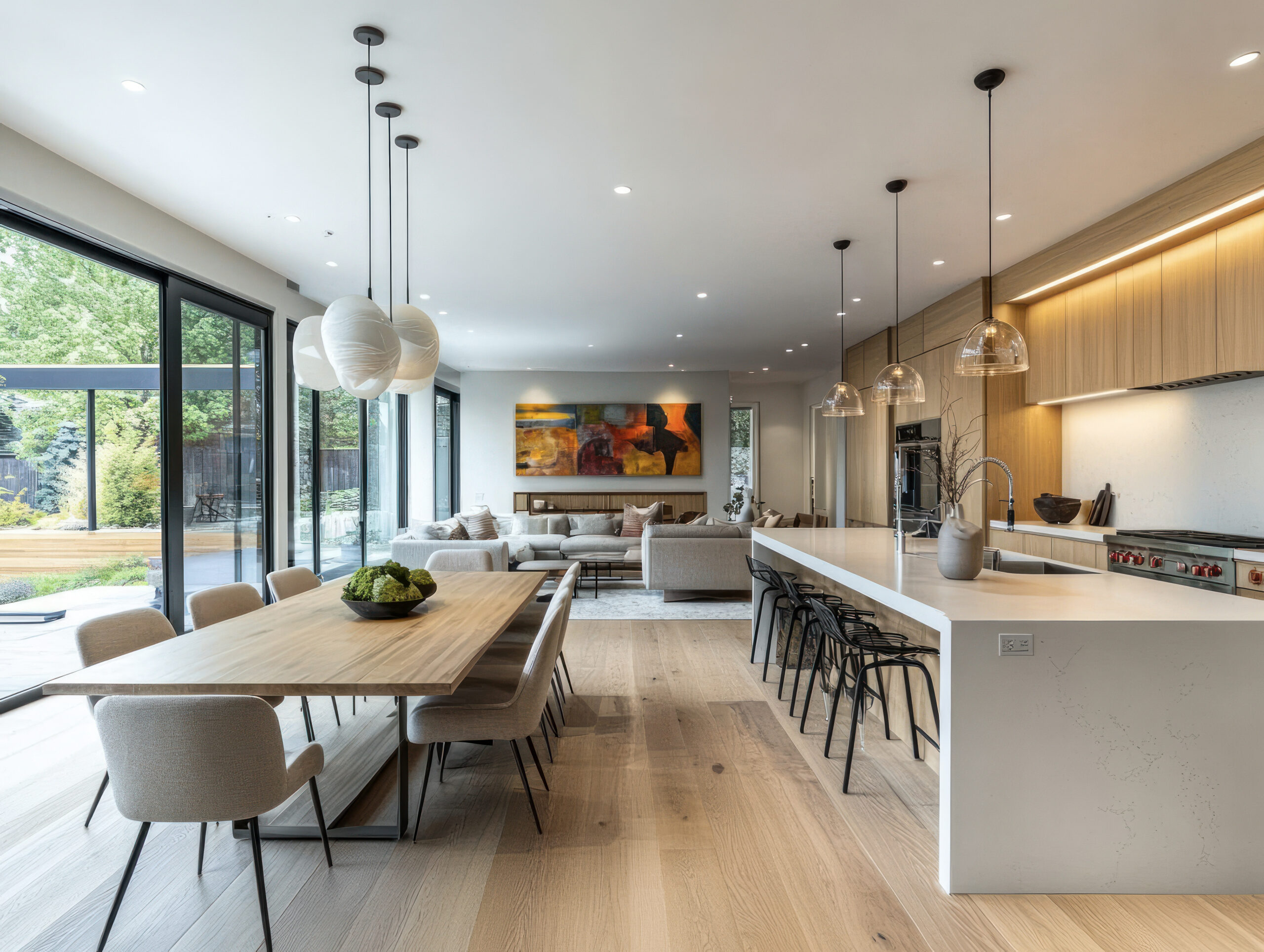
The kitchen is increasingly expected to connect with adjoining rooms rather than dominate them. This is influencing the look of cabinetry, lighting and appliances. Furniture-style details, glazed cabinets and softer painted finishes help a kitchen sit naturally alongside a dining area or lounge.
Concealed or integrated appliances support this quieter approach. A hidden breakfast station can keep kettles, toasters and coffee equipment out of sight when not in use. Appliance garages and pocket doors are useful where there is enough worktop depth, though they should be specified carefully so doors do not interrupt circulation when open.
Islands will remain desirable, but they need to earn their footprint. A large island can provide seating, preparation space and storage, yet it may not suit every room. In narrower kitchens, a peninsula or a compact table-height extension may improve movement and create a more comfortable place to gather.
Lighting that changes with the day
A single row of ceiling spotlights rarely gives a kitchen the atmosphere or flexibility it deserves. The kitchens that feel most considered in 2027 will use several layers of light: functional task lighting over preparation areas, softer ambient light for evenings and feature lighting to bring attention to a dining table or island.
Under-cabinet lighting remains highly practical, especially on darker winter afternoons. Internal illumination in glazed cupboards or pantries can add a refined finish and make storage easier to use. Dimmable fittings are particularly worthwhile in open-plan homes, allowing the room to shift from a working kitchen to a relaxed entertaining space.
Lighting should be planned alongside cabinetry and electrics, rather than left until the final stage. This ensures switches, sockets and fittings are placed where they genuinely support the layout.
Technology should feel useful, not distracting
Smart appliances and charging points have a place in a modern kitchen, but the best technology is often the least conspicuous. Induction hobs, boiling-water taps, integrated extraction and efficient refrigeration can improve day-to-day use without making the room feel overly technical.
Before choosing connected appliances, consider whether their features will make a genuine difference to your household. A reliable oven with the cooking functions you use is usually more valuable than a complex system that is rarely touched. Likewise, a boiling-water tap can be transformative for frequent hot drinks, but may be less essential in a smaller or occasional-use kitchen.
Quality planning gives technology a proper home, with suitable ventilation, access for servicing and sensible cable management. These details may not be visible once the room is complete, but they contribute greatly to long-term enjoyment.
Make the trend fit your home
The strongest 2027 kitchens will not all look alike. A period property may call for an in-frame kitchen with painted cabinetry and tactile hardware, while a contemporary extension may suit clean lines, integrated appliances and a sculptural island. Both can use the same underlying principles: durable materials, thoughtful storage, warmth and a layout built around real routines.
For homeowners in Essex considering a permanent kitchen investment, a professional design visit provides the opportunity to test ideas against the room, the architecture and the way your household lives. At Home Interiors by Anscombs, tailored planning helps bring together beautiful finishes and the practical details that make a fitted kitchen feel effortless from the first morning onward.
The right kitchen for 2027 is not defined by one fashionable colour or feature. It is a room with enough character to feel like yours, enough organisation to make life easier and enough quality to remain a welcoming part of the home long after trends have moved on.